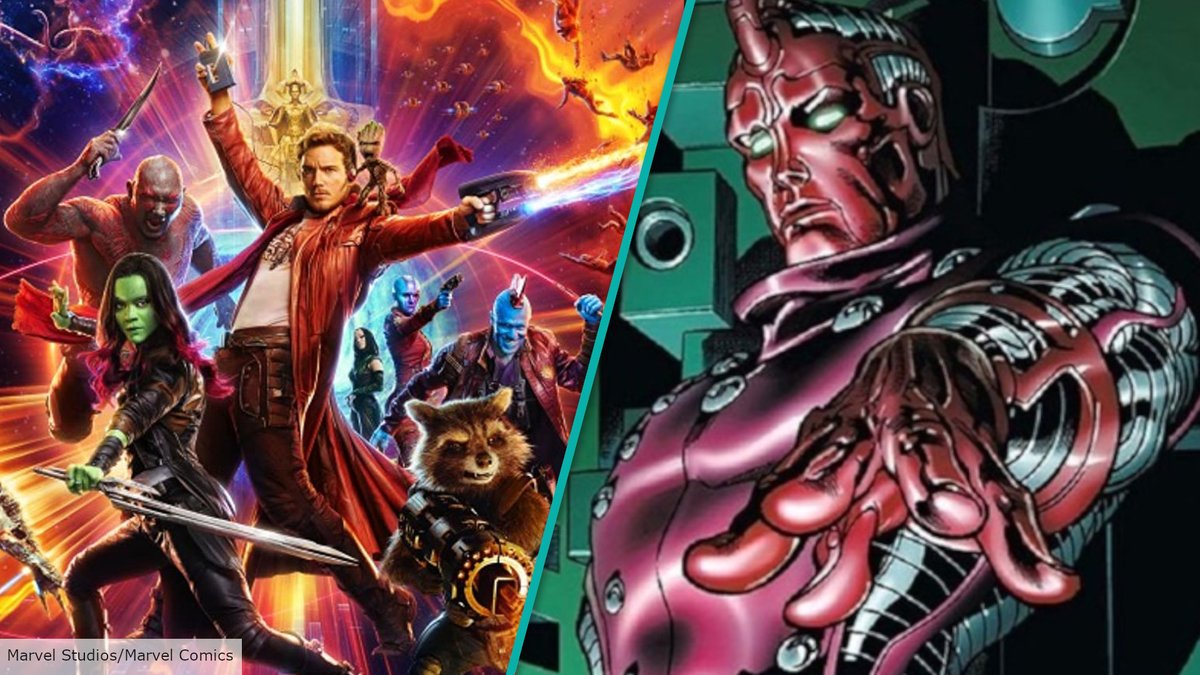
When we talk about the most memorable villains in the Marvel Cinematic Universe, many names leap to mind: Loki, Thanos, Killmonger. But then there's Ronan the Accuser, the primary antagonist of Guardians of the Galaxy Vol. 1. His story, while central to the film's plot, often feels less impactful, raising questions about his motivations and the overall strength of his villain arc. Was he just a two-dimensional bad guy, or was there more going on beneath the surface that we, as viewers, might have missed when analyzing Ronan's Motivations and Villain Arc in Guardians of the Galaxy Vol. 1?
This article unpacks Ronan's journey, his driving forces, and the behind-the-scenes factors that sculpted his portrayal, offering a comprehensive look at one of the MCU’s more complex, albeit often criticized, antagonists.
At a glance: Understanding Ronan the Accuser
- Who he is: A zealous Kree warlord driven by extreme nationalism and ancient hatred.
- Core Motivation: To eradicate the Xandarian people, whom he views as enemies of the Kree Empire.
- Initial Alliance: Teams up with Thanos, believing it will help him achieve his goal of destroying Xandar.
- The Turn: Betrays Thanos to wield the Power Stone himself, intending to enact his vengeance directly.
- His Downfall: Overwhelmed and ultimately destroyed by the combined efforts of the Guardians of the Galaxy.
- Behind the Scenes: His character suffered from "messy villain plot stuff" influenced by the now-defunct Marvel Creative Committee, as noted by director James Gunn.
- Broader Context: Represents a recurring MCU challenge with developing compelling, multi-layered villains in its early phases.
The Echoes of War: Ronan's Roots in Kree-Xandarian Conflict
To truly understand Ronan, we must first appreciate the long and bloody history between his people, the Kree, and the Xandarians. For centuries, these two civilizations were locked in a bitter war, a conflict so devastating it shaped entire generations. While a peace treaty eventually brought an end to open hostilities, it did little to quell the deep-seated resentment and trauma within hardline Kree factions.
Ronan the Accuser was not just a soldier; he was a zealot, a fundamentalist who saw the peace treaty as an insult, a betrayal of his people's sacrifices. For him, the war was far from over; it simply entered a new, more insidious phase of appeasement. His worldview was forged in the fires of this conflict, convincing him that Xandar's continued existence was an affront to the Kree Empire and a threat to its future. This historical backdrop is absolutely crucial for grasping Ronan from Guardians of the Galaxy and his extreme ideology.
The Deal with the Devil: Thanos, the Power Stone, and a Path to Vengeance
Ronan's burning hatred for Xandar was so intense that he was willing to forge an alliance with Thanos, the Mad Titan, a being whose reputation for galactic conquest and destruction preceded him. Thanos, at this point, was on his quest to gather the Infinity Stones, and he saw Ronan as a useful, if temporary, instrument. The deal was simple: Ronan would retrieve the Orb (which contained the Power Stone) for Thanos, and in return, Thanos would help him wipe Xandar off the galactic map.
This alliance highlights the singular focus of Ronan's ambition. He wasn't interested in universal domination; he wasn't driven by a lust for power for its own sake. His motivation was purely retributive, a desire to settle a centuries-old score. He viewed Thanos as a means to an end, a blunt instrument to deliver the justice he felt Xandar deserved. It's a pragmatic, if morally reprehensible, decision that defines the early stages of his villain arc.
The Ultimate Betrayal: When Means Become Ends
The turning point in Ronan's arc comes when he finally gets his hands on the Orb and discovers it contains an Infinity Stone – specifically, the Power Stone. This cosmic artifact, capable of unimaginable destructive force, offered him a direct path to his ultimate goal, bypassing Thanos entirely. Why rely on a larger, more unpredictable power when you can wield the ultimate weapon yourself?
Ronan's decision to betray Thanos wasn't an act of ambition beyond his initial goal; it was an acceleration of it. He didn't suddenly crave universal conquest; he just found a more efficient, personal way to annihilate Xandar. Infused with the Power Stone's energy, his Cosmi-Rod became a weapon of unparalleled devastation, and his declaration to destroy Xandar himself solidified his transformation from a vengeful warlord into a truly terrifying, self-empowered force of destruction. This shift effectively severing his ties with Thanos and placing him as the sole architect of Xandar's impending doom, showcases his unwavering, single-minded resolve.
The Creative Committee's Ghost: Unpacking Ronan's "Messy Villain Plot Stuff"
While Ronan's motivations are clear on paper, many viewers and critics found him to be a relatively one-dimensional antagonist, lacking the depth and nuance that could have made him truly iconic. As director James Gunn himself candidly explained, Ronan's character suffered from "messy villain plot stuff." This wasn't necessarily a flaw in Gunn's vision or the actors' performances, but rather the consequence of significant external input.
The primary culprit, as Gunn indicated, was the now-defunct Marvel Creative Committee. This internal group, composed of influential figures like Brian Michael Bendis, Dan Buckley, Joe Quesada, and Alan Fine, was initially established to enhance Marvel's cinematic stories. However, by the time Guardians of the Galaxy Vol. 1 was in production, the committee often generated conflict and diluted creative visions. Guardians Vol. 1 was one of the last major projects heavily overseen by this committee before its eventual dismantling in 2015. Their influence, intended to "improve" the story, often resulted in a watered-down character, preventing a deeper exploration of Ronan's psychological torment or the complexities of the Kree-Xandarian conflict that fueled his rage. This provides crucial context for understanding why Ronan, despite his potent motivations, might have felt underdeveloped on screen.
The MCU's Early Villain Problem: A Pattern of "One and Done" Foes
Ronan is, unfortunately, not an isolated case. For a significant portion of its early phases, the Marvel Cinematic Universe struggled with creating truly memorable and well-fleshed-out villains. Many antagonists were designed as "one and done" characters, serving their purpose for a single film and then being unceremoniously dispatched. They often lacked complex backstories, relatable motivations, or the potential for return, making them feel like mere plot devices rather than compelling forces of opposition.
Loki, of course, stands out as a glaring exception, benefiting from multiple appearances and a deeply intertwined relationship with the main heroes, particularly Thor. But for characters like Malekith, Yellowjacket, and, yes, Ronan, their motivations, while present, often felt underdeveloped compared to the heroes they faced. This created a recurring criticism that the MCU's heroes often outshone their adversaries, leading to less dramatic tension and fewer lasting impacts from the villains themselves.
The Guardians' United Front: How Ronan's Destruction Defined Our Heroes
Ironically, Ronan's singular focus and overwhelming power served a critical purpose for the Guardians of the Galaxy. His existence as an immediate, existential threat to Xandar forced this ragtag group of misfits—Peter Quill, Gamora, Drax, Rocket, and Groot—to finally shed their individualistic tendencies and truly coalesce as a team. They weren't fighting for abstract ideals; they were fighting to protect innocent lives from a madman wielding an Infinity Stone.
The climax, where the Guardians collectively channel the Power Stone to defeat Ronan, is a powerful symbolic moment. It's not just about raw power; it's about unity, friendship, and self-sacrifice. Ronan, for all his strength and conviction, was ultimately a lone wolf, driven by hatred. The Guardians, fueled by their nascent bond, demonstrated that collective strength, even from disparate individuals, could overcome even the most formidable of foes. His defeat marked their true birth as a heroic unit.
Learning from the Past: The Evolution of MCU Antagonists
While Ronan might not be remembered as a top-tier MCU villain, the lessons learned from characters like him clearly influenced later productions. The criticisms surrounding "one and done" antagonists led to a conscious effort by Marvel Studios to invest more in their villains, giving them richer backstories, more understandable motivations, and sometimes even a degree of sympathy.
Films like Guardians of the Galaxy Vol. 2 delivered Ego the Living Planet, whose charming facade hid a truly monstrous cosmic ambition, directly tied to Peter Quill’s parentage. Spider-Man: Homecoming introduced The Vulture, a villain whose origins were rooted in economic desperation and a desire to provide for his family, making him surprisingly relatable. Even Thanos, who was teased throughout earlier films, received an entire movie devoted to fleshing out his philosophy and tragic backstory in Avengers: Infinity War. These later villains demonstrate a clear evolution, showing that Marvel learned to create antagonists who were not just obstacles, but compelling characters in their own right, reflecting a departure from the "messy villain plot stuff" of earlier productions.
Addressing Common Criticisms and Misconceptions About Ronan
Even years after Guardians Vol. 1, Ronan remains a subject of debate. Let's clarify some common points:
Was Ronan just a pawn of Thanos?
Initially, yes, he was an ally working for Thanos. However, his motivations were always his own: the destruction of Xandar. He saw Thanos as a tool to achieve that. Once he had the Power Stone, he immediately betrayed Thanos, proving his ultimate allegiance was to his own fanatical cause.
Did Ronan have any redeemable qualities?
From a conventional hero's perspective, very few. His actions were driven by extreme xenophobia and a desire for genocide. However, one could argue that his unwavering devotion to what he believed was right for his people, the Kree, shows a twisted form of loyalty and conviction, albeit misplaced and destructive.
Could Ronan have been a more complex character?
Absolutely. Had the Marvel Creative Committee's influence been less pervasive, director James Gunn likely would have been able to delve deeper into the Kree-Xandarian conflict, Ronan's personal trauma, or the psychological toll of his zealous dedication. This could have explored the nuances of his radicalization, making him a more tragic and compelling figure, rather than just a furious warlord.
Was Ronan truly defeated by a dance-off?
While Peter Quill's dance-off distraction was pivotal in creating an opening, it wasn't the actual defeat. It bought the Guardians precious time. Ronan was ultimately defeated when the Guardians collectively channeled the immense power of the Power Stone through their united grasp, overloading and destroying him. It was a victory of teamwork and emotional connection over individual, destructive force.
Beyond the Arc: Ronan's Enduring Impact on the MCU's Narrative
Despite his perceived shortcomings, Ronan’s brief but impactful appearance served several crucial narrative functions within the MCU. He introduced the Kree Empire more fully, setting the stage for later developments in Captain Marvel. He showcased the terrifying power of an uncontained Infinity Stone, giving audiences a stark preview of the cosmic threats to come. Most importantly, his presence forged the Guardians of the Galaxy into the unlikely heroes we know and love.
His story is a vital piece in the early MCU tapestry, a testament to the challenges of world-building and character development within a sprawling cinematic universe. While he might not be the most celebrated villain, his arc, complete with its behind-the-scenes complexities, offers a fascinating case study in how films are made and how creative visions evolve.
What Ronan's Story Teaches Us About Villainy and Storytelling
Ronan's motivations and villain arc in Guardians of the Galaxy Vol. 1 offer a valuable lens through which to examine both the strengths and weaknesses of early MCU storytelling. For creators, it's a stark reminder of the perils of committee-driven narratives and the importance of a singular, clear creative vision. For viewers, it highlights that even a character perceived as "one-dimensional" can carry significant thematic weight, particularly in establishing the heroism of the protagonists.
Ultimately, Ronan serves as a powerful antagonist who, through his sheer destructive ambition, solidified the Guardians' bond and set the stage for the cosmic scope of the MCU. While his personal depth may have been curtailed, his impact on the narrative and the development of the Guardians is undeniable. He was the fire that forged them, and for that, his place in Marvel history is secure.