The Marvel Cinematic Universe is a tapestry woven with heroes, villains, and pivotal moments that reshape the cosmic landscape. Among these, the dramatic end of Ronan the Accuser stands out, not just as a significant defeat, but as a moment that profoundly defined his enduring legacy within the MCU. You might remember the powerful Kree extremist, driven by fanaticism and a thirst for vengeance, clashing with an unlikely band of misfits. His demise, unexpected in its delivery, left an indelible mark, influencing character arcs, galactic politics, and even setting the stage for bigger threats to come.
Understanding The Death of Ronan: Defeat and Legacy in the MCU isn't just about recalling a villain's end; it's about appreciating how a single, spectacular failure can echo through an entire cinematic universe.
At a Glance: Ronan's Defining Defeat
- Who He Was: Ronan the Accuser, a radical Kree warlord obsessed with vengeance against Xandar.
- The Catalyst: His acquisition of the Power Stone (inside the Orb), which granted him immense, uncontrollable power.
- His Primary Defeat: In Guardians of the Galaxy Vol. 1, Star-Lord's impromptu dance-off distraction allowed the Guardians to seize the Power Stone and destroy him.
- The Alternate Defeat: In What If...? Season 2, Episode 1, a variant Ronan who successfully couped Thanos was defeated by Nebula's cunning and Xandar's shields.
- His Lasting Legacy: Shaped the Guardians of the Galaxy into a cohesive unit, underscored the immense power and danger of the Infinity Stones, and indirectly paved the way for Thanos's direct intervention.
- Why It Matters: His fanaticism and ultimate downfall serve as a stark warning about unchecked power and single-minded vengeance.
The Relentless Kree: Who Was Ronan the Accuser?
Before diving into his spectacular defeat, it’s essential to understand the force Ronan the Accuser represented. Introduced in Guardians of the Galaxy Vol. 1, Ronan was a high-ranking Kree military commander and a devout follower of extremist Kree ideals. His species had been at war with the Xandarians for a thousand years, a conflict that only recently concluded with a peace treaty. Ronan, however, viewed this treaty as an insult, a surrender that betrayed his people’s honor and his own personal grief.
He wasn't merely a soldier; he was a zealot. His entire being was consumed by a desire to destroy Xandar and everything it stood for. This unwavering, almost religious, fanaticism made him a terrifying and relentless adversary. When he struck a deal with Thanos to retrieve the Orb (which housed the Power Stone), he wasn't just working for the Mad Titan; he was leveraging Thanos's power to further his own genocidal agenda. His unwavering commitment to his cause made him a formidable early antagonist, demonstrating the sheer scale of the threats lurking beyond Earth.
The Fateful Confrontation: Ronan's Defeat in Guardians of the Galaxy Vol. 1
Ronan’s primary demise, the one that cemented his place in MCU history and directly informed the Guardians’ origins, took place on Xandar. It was a confrontation brimming with tension, humor, and a surprising twist that perfectly encapsulated the Guardians’ unique brand of heroism.
Power of the Orb: A Blessing and a Curse
Ronan's fatal mistake was his decision to betray Thanos and claim the Power Stone for himself. After acquiring the Orb, he discovered it contained one of the universe's most destructive forces: the Power Stone. Instead of delivering it to Thanos, Ronan fused the Stone directly into his war hammer, the Cosmi-Rod, making himself seemingly invincible.
Wielding the Power Stone, Ronan became a force of nature. He decimated Xandarian fleets, easily brushed aside Nova Corps defenses, and even withstood direct attacks from the nascent Guardians. This immense, raw power fueled his arrogance, convincing him that he was untouchable and destined to eradicate Xandar. However, this power also proved to be his undoing, blinding him to the unconventional tactics of his foes.
The Dance-Off Dilemma: Star-Lord's Unconventional Gambit
As Ronan stood poised to deliver the killing blow to Xandar, broadcasting his intent to billions, Peter Quill, Star-Lord, did something nobody expected: he challenged Ronan to a dance-off. This moment, often remembered for its comedic genius, was a stroke of pure improvisation and strategic brilliance.
The dance-off wasn't just for laughs; it bought precious seconds. Ronan, momentarily bewildered by the sheer absurdity of the challenge, paused. This fraction of a moment allowed Rocket to blast Ronan's Cosmi-Rod, separating him from the Power Stone.
Star-Lord's Moment: Wielding the Unwieldable
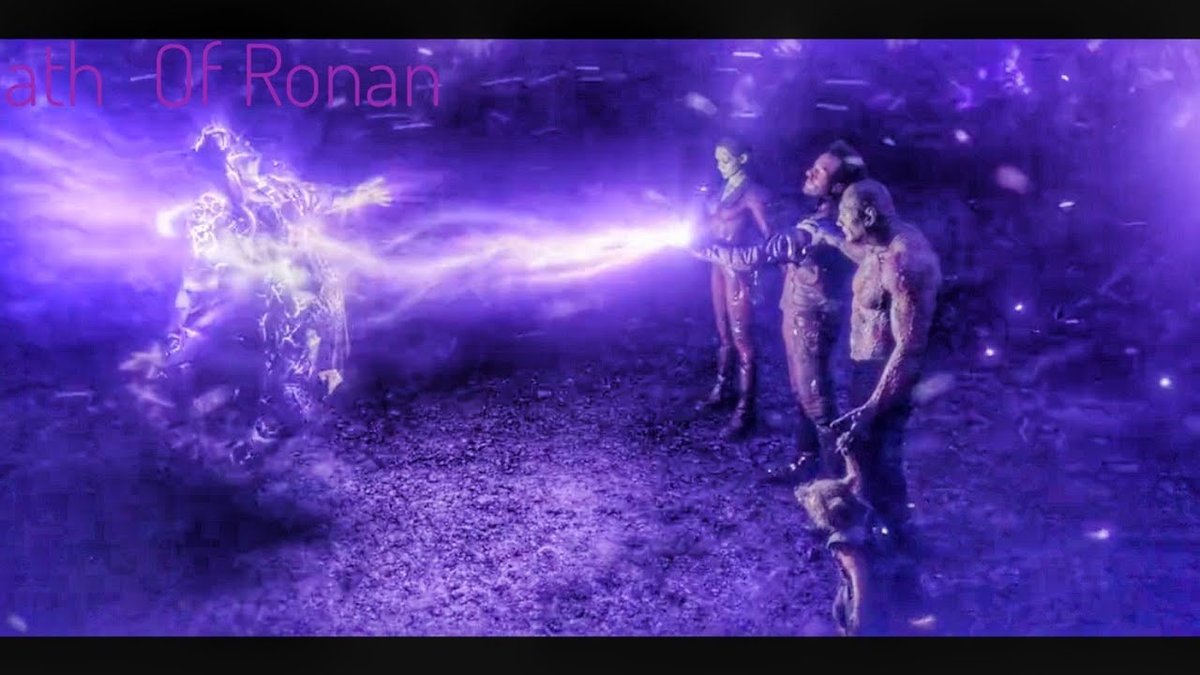
With the Power Stone free, Quill instinctively grabbed it. The raw energy of the Stone began to course through him, threatening to tear him apart, just as it had done to others who dared to touch it directly. But Quill, a hybrid human-Celestial, possessed a unique genetic heritage from his father, Ego, which allowed him to momentarily contain the Stone's destructive force.
In a display of newfound unity, Gamora, Drax, and Rocket grabbed hold of Quill, sharing the burden and channeling the Power Stone’s energy together. This collective act of sacrifice and teamwork, forged in the heat of battle, allowed them to focus the Stone's destructive energy directly at Ronan. The resulting blast obliterated the Kree extremist, marking the end of his reign of terror and the definitive birth of the Guardians of the Galaxy as a true team.
This defeat wasn't just physical; it was a profound humiliation for Ronan, a fanatical warrior undone by a dance and a group of misfits. It highlighted the MCU's willingness to blend serious stakes with unexpected humor, creating a memorable villainous exit. For more on Ronan's story in Guardians, you can explore his full arc.
A Legacy Forged in Failure: The Impact of Ronan's Death
Ronan's defeat was more than just the end of a villain; it was a pivotal event that sent ripples throughout the early MCU, shaping characters, conflicts, and the very understanding of cosmic power.
Shaping the Guardians: From Misfits to Family
Perhaps the most immediate and profound impact of Ronan's defeat was on the Guardians themselves. Until that point, they were a disparate group of individuals driven by self-interest, revenge, or opportunism. Quill wanted to sell the Orb, Gamora sought redemption, Rocket and Groot were after bounties, and Drax was consumed by vengeance against Ronan.
Their shared moment of harnessing the Power Stone, of literally holding hands to withstand its power and deliver justice, forged them into something more: a family. It was a moment of true heroism where their individual motivations coalesced into a collective purpose. Ronan's threat forced them to unite, to trust each other, and ultimately, to become the heroes the galaxy needed. Without his intense and personal antagonism, their bond might never have solidified in the same way.
A Warning to the Cosmos: The Power of the Infinity Stones
Ronan’s acquisition and misuse of the Power Stone served as the MCU's first major showcase of an Infinity Stone's raw, devastating capabilities outside of Loki's indirect use of the Mind Stone via the Scepter. His brief period of wielding it demonstrated:
- Unfathomable Destructive Potential: The Power Stone could level cities and obliterate fleets. Its energy was almost limitless.
- The Danger of Uncontrolled Power: Ronan, despite his strength, was merely a conduit. The Stone would have eventually consumed him or anyone else who tried to wield it directly without sufficient power or protection.
- The Need for Wielders: It hinted at a future where characters might be able to control or contain these immense forces, a theme that would be central to Thanos’s quest.
Ronan’s death underlined the stakes involved with these cosmic artifacts, signaling to audiences (and other characters) that the Infinity Stones were not to be trifled with.
Thanos's Unseen Hand: A Catalyst for Direct Action
Ronan's failure to deliver the Power Stone had unforeseen consequences for Thanos. By betraying the Mad Titan, Ronan inadvertently pushed Thanos to a critical realization: relying on subordinates was a liability. Thanos had initially delegated the task of gathering Infinity Stones to others (Loki, Ronan, later his Children). Each time, these proxies failed, often due to their own ambition or incompetence.
Ronan's betrayal and subsequent destruction of the Power Stone (though it was later reformed) was arguably the final straw. It forced Thanos to abandon his passive approach and embark on a direct, personal quest for the Infinity Stones, culminating in Avengers: Infinity War. In a twisted way, Ronan’s failure sped up Thanos’s ultimate plan, bringing the greatest threat the MCU had ever seen directly to the forefront.
Alternate Realities, Alternate Endings: Ronan in What If...? Season 2
While Ronan's Guardians of the Galaxy Vol. 1 death is his defining moment in the main MCU timeline, the concept of the multiverse offers intriguing "what if" scenarios. The "CONTEXT RESEARCH" provided notes a Phase 5 death for "Ronan the Accuser (What If...? Season 2, Episode 1)." This alternate reality offers a fascinating look at how his story could have gone and how his defeat might have been different.
The Variant Who Conquered Thanos
In What If...? Season 2, Episode 1, titled "What If... Nebula Joined the Nova Corps?", we encounter a Ronan who achieved a greater level of success—at least initially. In this timeline, Ronan didn't just betray Thanos; he conquered him. He successfully led a coup against Thanos, imprisoned him, and took control of the Black Order and Thanos's armada. This Ronan variant, unchecked by the Guardians, became the dominant cosmic power, still fixated on destroying Xandar, but now with Thanos's formidable resources at his command.
This version of Ronan highlights his immense ambition and strategic capabilities when given the right circumstances. It shows that his drive wasn't just about Xandar; it was about absolute power and dominion, echoing the fanaticism of his prime-timeline counterpart, but scaled to an even grander, more terrifying level.
Nebula's Ingenuity: A Different Defeat
Even with Thanos's army, this variant Ronan met his end. His downfall came not from a dance-off, but from the cunning of Nebula. In this reality, Nebula, having joined the Nova Corps, understood Ronan's tactics and the vulnerabilities of his massive fleet.
Nebula and her Nova Corps allies planned to use Xandar's planetary shield as a weapon. They hacked into the shields, transforming them from a defensive barrier into an offensive energy field. As Ronan's flagship approached, Nebula activated the weapon, causing the shields to lash out and decimate Ronan's fleet, including his own vessel. Ronan died in the destruction of his armada, once again defeated by a clever, unexpected tactic.
What This Tells Us About Ronan
The What If...? variant's death, while different in execution, reinforces several core aspects of Ronan's character:
- Vulnerability to Cleverness: Whether it's Star-Lord's dance or Nebula's tactical genius, Ronan's overwhelming power and unwavering confidence often make him susceptible to unconventional, intelligent countermeasures.
- The Destructive Nature of His Ambition: In both timelines, his single-minded pursuit of power and vengeance ultimately leads to his demise. His fanaticism blinds him to genuine threats and alternative paths.
- The Inevitability of Defeat: Regardless of how powerful he becomes, Ronan's character arc seems to be consistently tied to his ultimate failure, suggesting that his brand of extremist ambition is inherently self-destructive in the MCU.
This alternate ending in Phase 5 provides a fresh perspective on Ronan's potential and solidifies his legacy as a character whose defeat, no matter the timeline, is as impactful as his brief moments of power.
Beyond the Battlefield: Ronan's Enduring Relevance
Even with his comparatively short screen time, Ronan the Accuser remains a memorable and important figure in the MCU's larger narrative. His relevance extends beyond his immediate conflict with the Guardians.
Thematic Significance: Fanaticism and the Corrupting Influence of Power
Ronan embodies the dangers of religious or ideological extremism. His unwavering belief in Kree superiority and his absolute conviction in the justice of his cause made him impervious to reason or compassion. He serves as a powerful cautionary tale about how absolute conviction, when unchecked, can lead to monstrous acts.
Furthermore, his desire for power, exemplified by his willingness to betray Thanos and fuse with an Infinity Stone, showcases the corrupting influence of such immense capabilities. He wasn't merely a bad guy; he was a tragic figure consumed by his hatred and by a power he couldn't truly control.
Paving the Way for Future Threats
Ronan's story arc, particularly his interaction with the Power Stone and his connection to Thanos, laid crucial groundwork for the MCU’s cosmic phase. He was one of the earliest characters to bring the concept of Infinity Stones to the forefront, giving audiences a visceral understanding of their destructive potential.
His involvement also gave context to Thanos's long game. While Thanos was merely glimpsed in earlier films, Ronan's direct interaction with him (and his subsequent betrayal) revealed the Mad Titan's methods and the sheer reach of his ambition, setting the stage for the Infinity Saga's grand climax. Ronan was a stepping stone, a formidable early threat that helped define the scale and stakes of the battles to come.
Common Questions About Ronan's Demise
Given the unique circumstances of his defeat, it’s natural for audiences to have lingering questions about Ronan.
Was Ronan truly defeated by a dance-off?
No, not entirely. The dance-off was a crucial distraction orchestrated by Star-Lord. It stunned Ronan just long enough for Rocket to disable his weapon and separate him from the Power Stone. The actual defeat came when the Guardians collectively channeled the Power Stone's energy, blasting Ronan into oblivion. So, while the dance-off was the catalyst for his vulnerability, the Power Stone itself delivered the final blow.
Could Ronan have beaten Thanos?
In the main MCU continuity, absolutely not. Ronan, even with the Power Stone, was struggling to wield it. Thanos, as seen in Infinity War and Endgame, was a far more experienced, powerful, and strategic warrior, capable of wielding multiple Infinity Stones and demonstrating incredible combat prowess. Ronan was a fanatic; Thanos was a force of nature.
However, the What If...? Season 2 variant did successfully coup Thanos. This suggests that a different set of circumstances, perhaps a Thanos who was less prepared or focused, could lead to a Ronan who temporarily gained the upper hand. But even that variant Ronan was ultimately defeated, albeit by Nebula, not Thanos.
Is Ronan gone for good in the main MCU?
Yes, the Ronan from Guardians of the Galaxy Vol. 1 is definitively dead. He was disintegrated by the Power Stone. While the multiverse allows for variants to appear (as seen in What If...?), the original, main MCU Ronan will not be returning to the primary timeline. His story, in that continuity, is complete.
The Final Verdict: Why His Defeat Defines Him
Ronan the Accuser, in his zealous pursuit of vengeance, carved a significant, albeit short-lived, path through the MCU. His defeat wasn't just a simple moment of a hero overcoming a villain; it was a layered event that achieved multiple narrative feats. It solidified the Guardians of the Galaxy as a cohesive, heroic unit. It underscored the terrifying power of the Infinity Stones. And, perhaps most importantly, it served as a crucial, albeit indirect, catalyst for Thanos to take his cosmic quest into his own hands.
Whether it was the dance-off heard 'round the galaxy or Nebula's ingenious tactical strike, Ronan's final moments consistently highlighted his fatal flaw: a fanatical devotion to a cause, backed by immense power, but vulnerable to unexpected wit and unity. His legacy isn't built on his victories, but on how his spectacular, defining defeat reshaped the cosmos, reminding us that even the most formidable threats can be undone by the most unlikely of heroes.